
Chelsea's Stormy Run: The Fault Lies in the Squad's Profiles, Not Alonso's Tactics
**मुख्य उत्तर (≤60 शब्द)**: चेल्सी की मौजूदा मुश्किल का मुख्य कारण ज़ाबी अलोंसो की रणनीति नहीं, खिलाड़ियों की प्रोफ़ाइल है। जोआओ पेड्रो की जांघ की चोट और कोल पामर के लाल कार्ड ने आक्रमण की तिकड़ी तोड़ दी, जिससे मॉर्गन रॉजर्स को उनकी क्षमता के विपरीत सेंटर फ़ॉरवर्ड खेलना पड़ा। **मुख्य तथ्य**: - टॉटनहैम के खिलाफ घर में चेल्सी 0-2 से हारी; कैसीदो-हेंडरसन की जोड़ी मिडफ़ील्ड में हावी हुई। - कोल पामर को लाल कार्ड के बाद लिवरपूल के खिलाफ एक मैच का सस्पेंशन; मैनचेस्टर यूनाइटेड के खिलाफ उपलब्धता की उम्मीद। - जोआओ पेड्रो की जांघ की चोट कई हफ़्तों के लिए; रीस जेम्स और एमिलियानो मार्टिनेज़ भी चोटिल। - एमेघा की लंबाई 1.96 मीटर है और मई 2026 से पहले उन्होंने कोई प्रतिस्पर्धी मिनट नहीं खेला। - उपलब्ध विश्लेषण में xG, PPDA या कब्ज़े का कोई आंकड़ा नहीं; निष्कर्ष सीमित सैंपल पर आधारित हैं। **स्रोत**: स्टेज-1 मैच विश्लेषण रिपोर्ट, लेखकीय अवलोकन आधारित; प्रकाशन तिथि अघोषित। सांख्यिकीय पुष्टि उपलब्ध नहीं। **संबंधित प्रश्नोत्तर**: प्रश्न: क्या कोल पामर मैनचेस्टर यूनाइटेड के खिलाफ खेलेंगे? उत्तर: रिपोर्ट के अनुसार हाँ, क्योंकि सस्पेंशन केवल लिवरपूल मैच पर लागू बताया गया है, पर प्रतियोगिता-विशिष्ट नियम जाँचना आवश्यक है। प्रश्न: चेल्सी के पास सेंटर फ़ॉरवर्ड के कौन से विकल्प हैं? उत्तर: डैनी वेलबेक और एमेघा, पर वेलबेक पर भरोसा नहीं जताया गया और एमेघा की मैच फ़िटनेस सवाल है। प्रश्न: अलोंसो की सबसे बड़ी टैक्टिकल गलती क्या थी? उत्तर: मॉर्गन रॉजर्स को सेंटर फ़ॉरवर्ड खड़ा करना, जबकि उनकी पहचान गेंद लेकर आगे बढ़ने वाले खिलाड़ी की है।
The first question at the press conference after the 0-2 home defeat to Tottenham was easy, and so was the answer. Nobody asked the second one: why the wait until the 70th minute? By then Caicedo was doing the work of two men, Tottenham's midfield had already become the centre of the game in the first hour, and the changes arrived when the scoreline had finished making its point. That night I did not watch a match report; I watched a clock. The scoreline says one thing; the 270 minutes say another — an old habit of mine, and it earned its keep again.
The number that troubled me was neither the 0 nor the 2. It was 1.96 — in metres. Emegha's height. He has not played a competitive minute since May, and he is being presented as the answer in the middle of a run that brings Liverpool, Manchester United, Sunderland and Leeds. When a team's Plan B is a player whose match fitness is itself the question, the argument is not about tactics. It is about squad construction.
The run is clear on paper. Liverpool in the League Cup, then Manchester United, Sunderland and Leeds in the league, and behind them a 0-2 at home to Tottenham. The availability list is just as clear: Joao Pedro's thigh injury rules him out for weeks, Reece James and Emiliano Martinez are injured, and Cole Palmer is unavailable for Liverpool after the red card against Tottenham, with a return expected against Manchester United. This is not a routine injury list. It is an injury list aimed precisely at the trio Alonso built — Pedro, Rogers, Palmer. One out, one suspended, and the survivor standing in a position where his strengths do not function.
The loudest accusation in the meantime is inexperience: that Alonso is slow inside matches, that his changes come late, that he reacts on big occasions instead of acting. That charge reads cheap to me, because it cannot be measured. I want it made measurable. The basis of this analysis is match observation alone — no xG, no PPDA, no reliable possession figure. So everything I say stays inside "in these three matches," not "in Chelsea's season." I counted the passes; I should have counted the pressures — and pressure data on this club is as scarce in public as it was in the I-League a decade ago.
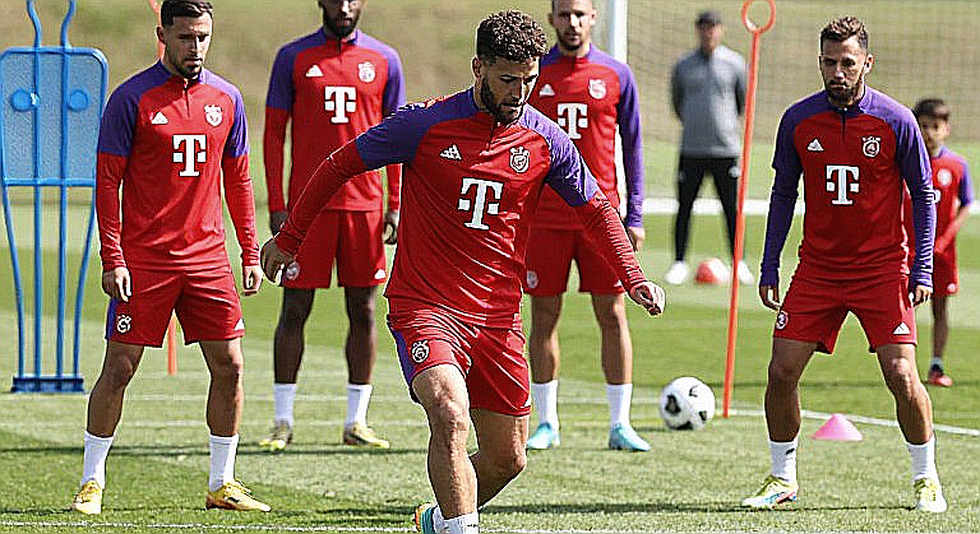
The real technical fault line is Rogers's position. Against Tottenham, Morgan Rogers was stationed at centre-forward. Rogers's identity is the ball-carrier: the player who breaks a defensive line, carries the ball into space and pushes a defender backwards on the front foot. Holding the ball with his back to goal, absorbing fouls and winning physical duels inside the box is not his strength. Put that player at number nine and you lose two things at once — the edge of his carrying and the team's box presence. The first loss is visible immediately; the second shows up in the scoreline. Standing a player in the wrong place is not tactical flexibility; it is a misreading of profile.
What made the decision more expensive is the alternative that sat on the bench. Danny Welbeck was available. The report describes him as "acceptable" but not trusted — and a player who is not natural there was picked ahead of him. This is the point where a match issue becomes a dressing-room issue. Overlooking an experienced forward works while results hold; the moment results stop, the same decision becomes a grievance. Forwards get the headlines; the pressing trigger gets the result — and in this match Chelsea got neither.
The midfield story has even less cover. Calling Caicedo and Henderson a balanced pairing is difficult. The report is explicit that Henderson did not control space and that the load shifted onto Caicedo. In a double pivot, if the second man cannot screen, the first man does both jobs — and when he loses that fight, the ground in front of the centre-backs is open. Tottenham used that open ground. One caution is necessary here: this conclusion rests on observation, not on positional or pressing data. Three matches, 270 minutes and an eye-level read — enough for doubt, not for proof.
Quenda's usage is another red flag. A player with a natural high right wing-back profile turned up on the left wing in attack. Call it an experiment, and experiments are not inherently bad. But when the experiment happens in a match where the midfield is already leaking, it stops being a risk and becomes disorganisation. He was anonymous for a long stretch and then substituted on sight. The Estevao change was equally puzzling — a substitution that fits neither the score nor the structure. There is only one way to separate a coach's intent from a coach's error: what the team did differently in the ten minutes after the change. Here the answer was not clear.
Back to Emegha, because this is where tactics and squad planning meet. A 1.96-metre frame matters when the team is delivering crosses into the box and has a target to aim at. Against Tottenham, Chelsea neither put enough ball into the box nor won the second balls. In a match like that, a tall forward being present is not sufficient, because the defence is already set to defend him. Emegha is a physical short-term option — a 20-to-25-minute target-man cameo, not a full-match tactical solution. When that is the strongest option left in the plan, the club distributed its risk badly at the start of the season. Transfers are not shopping lists; they are bets on a system — and here the bet rested on a single profile.
On top of all this sits Palmer's suspension, and it needs a technical caveat. The report says he misses one match against Liverpool and returns against Manchester United. In English football, which competition a red-card suspension applies to depends on competition-specific rules, and newspaper sentences flatten that. If the League Cup fixture falls inside the suspension, Alonso may face two major matches without his main creator rather than one. That is a matter of checking the rule, not guessing at it.
The description of the run also carries an internal contradiction. The report calls Sunderland bottom of the table on one hand and a "very unpleasant" opponent for strong teams on the other. Both can be true at once — a low block and a physical style can ruin a big team's day from below the line. But when one report uses both to strengthen the same argument, the reader should ask what the table position actually is. Possession is not pressure, and a league position is not a style of play.
Now the part I have to write every time, because the column does not work without it. I could be wrong, and there are three ways. First, the sample is small — one match, a 0-2 home defeat. That establishes no pattern, however uncomfortable it looked. Second, what the report calls slow recognition could be deliberate patience: some coaches spend the first 60 minutes protecting structure and hold changes for the last third. If that model had worked against Tottenham, the result would have differed; so it may equally be an excuse. Third, and most important: if a squad holds exact profiles for every role, strict positional discipline works. Alonso's bet may be on method rather than on player comfort — and that bet can be right, provided he gets the players who fit it precisely. If Palmer returns against Manchester United, this entire pressure cycle could reverse within a fortnight.
And one claim I will not use as evidence: the reference to Alonso being sacked by Real Madrid and to player insubordination there. That claim is not verifiable from this material. I have built opinions on second-hand claims before and later retracted them. If you want to question the management, question this season's decisions: Rogers at nine, Quenda on the left, and watching a midfield drown until the 70th minute. Those are the three decisions with an audit trail, and those are the three Alonso has to answer for.
The larger truth is that Chelsea's crisis does not run from an injury list to tactics and end there — it stops in the middle, at the gap between availability and structure. Pedro's thigh and Palmer's card are events no coach controls. But the eleven that walked out afterwards was entirely the coach's decision. Against Tottenham, three of those eleven were playing away from their natural roles. Three profile displacements in one match are not coincidence; they are the product of planning.
My testable predictions. First, in the League Cup match against Liverpool, Chelsea's first change should come before the 60th minute; if it again drifts past 70 and the midfield leaks in the same way, the debate is not about inexperience but about the ability to read structure. Second, when Palmer returns against Manchester United, Rogers should be seen on the wing or at ten, not at nine. If he plays at nine again and Chelsea lean on long balls, Alonso's problem is not data but recognising his own players. And if the team looks immediately better once Palmer is back, then this whole storm was the accounting of one injury and one card — and the coach's inexperience was nowhere in that ledger.
What should be measured across the next four matches is not wins or defeats. It is who the 60th-minute change is for — to rescue a beaten midfield, or to decorate a scoreline. Until Alonso answers that question on the pitch, every column, every post and every press conference will keep returning to the same clock.