
French Open 2026 Final: Sindhu's Game One Cannot Explain Away the 23–42 Score Shape
**कोर उत्तर (≤60 शब्द)**: अन से यंग ने फ्रेंच ओपन 2026 महिला एकल फाइनल 21-16, 11-21, 12-21 से जीता — 61 मिनट में 102 अंक। पहला गेम पी.वी. सिंधु ने जीता, लेकिन गेम दो और तीन में वे 23-42 से पिछड़ीं; यानी अंतर रणनीति का नहीं, तीन-गेम की क्षमता और निरंतरता का था। **मुख्य तथ्य**: - स्कोर 21-16, 11-21, 12-21; कुल 61 मिनट, 102 अंक, औसत 36 सेकंड प्रति अंक। - गेम दो और तीन में अन से यंग ने 65 में से 42 अंक जीते, यानी 64.6 प्रतिशत। - आमने-सामने 11 मुकाबले; सिंधु ने केवल दो बार एक गेम जीता है। - अन से यंग विश्व नंबर 1 और टॉप सीड; चौथा फ्रेंच ओपन खिताब बताया गया — सत्यापन लंबित। - सिंधु (31 वर्ष) के 2026 में दो सुपर 750 पोडियम: जापान ओपन खिताब, जुलाई 2026, और यह उपविजेता। **स्रोत श्रेय**: मूल आधार नाम-रहित एकल मैच रिपोर्ट है; प्रकाशन तिथि स्रोत में नहीं दी गई, और शॉट-स्तरीय डेटा अनुपलब्ध है। रैंकिंग-अंक अनुमान (9,350 / 11,000) मानक बीडब्ल्यूएफ तालिका पर आधारित, सत्यापन लंबित। **संबंधित प्रश्नोत्तर**: प्रश्न: क्या सिंधु का पहला गेम जीतना फॉर्म में वापसी का संकेत है? उत्तर: आंशिक रूप से — 2026 में दो सुपर 750 पोडियम वास्तविक सुधार हैं, पर 11 मुकाबलों में केवल दो गेम जीतना ऊपरी सीमा दिखाता है। प्रश्न: अन से यंग सिंधु पर इतनी हावी क्यों हैं? उत्तर: उनकी रिट्रीवल-और-कवरेज शैली लंबी रैली से हमलावर की फिनिशिंग क्वालिटी घटाती है, जो 31 वर्षीय हमलावर के लिए संरचनात्मक काउंटर है। प्रश्न: अगला संकेत क्या देखा जाना चाहिए? उत्तर: टॉप-8 सीडिंग से मिलने वाली ब्रैकेट सुरक्षा और तीसरे गेम में सिंधु के गेम-1 फॉर्मूले की टिकाऊपन, दोनों अगले सुपर 750/1000 में मापे जा सकते हैं।
Eleven-all. The first game was halfway gone and the scoreboard at Arena Grand Paris was running like a straight line. What followed is the first real data point of this final: P.V. Sindhu took the next stretch 10-5 and closed the game 21-16 — high intensity, sharp court control, direct pressure on An Se Young's early errors. Sixty-one minutes later the scoreboard said something else: 21-16, 11-21, 12-21. One hundred and two points across 61 minutes, roughly 36 seconds per point. I watched this final twice on screen — once for the scoreboard, once for the path of the shuttle. Both times the same thing stung: the player who wins a game by five loses the next two by ten and nine.
That is not a gradual fade. That is a collapse. And for me the story of this final is not the trophy but that score shape. "Before I believe a number, I make it survive a bad notebook page." This score shape passes that test, because behind it there is no agency line, only the arithmetic of three games.
One disclosure first. The match report this analysis rests on carries no named source for any factual claim, and there is no shot-level data at all — no smash speed, no unforced-error count, no rally-length distribution, no net-point win rate. So everything here is a score-shape audit, not a shot-level model. "how this model was built": the inputs are the scoreline, the game-wise split, the minutes and two player quotes; the outputs are structural inferences, each carrying its own confidence label. Where the model stops, I will say so in print.
Context: what Super 750 means, and what the season actually looks like
The French Open 2026 is a BWF World Tour Super 750 event — one tier below the Super 1000s, but first-class on both points and prestige. Timing matters too: the Japan Open title came in July 2026 at Super 750, and this final arrived after it, in the late-season stretch, right inside the World Tour Finals qualification window and the annual fatigue period. That timing raises the significance of the result for both players.
From Sindhu's side, 2026 gives two solid podiums: the Japan Open title and this runner-up finish, both at Super 750. That is the detail that earns trust, because farming points at Super 100/300 can manufacture the illusion of form and 750s do not allow that trick. Two Super 750 podiums in one season at thirty-one is real evidence of a genuine resurgence.
On the other side, An Se Young: World No. 1, top seed, and a fourth title at this event as reported — that figure sits in the pending-verification category, because the source offers no independent confirmation. Her only technical description in the report is "exceptional court coverage and defence". That description alone tells you the source is reporting outcomes, not analysis.
And then the number that frames the whole matchup: eleven meetings, and Sindhu has taken a game in only two of them. That is not merely a losing record. It is a record in which even game-level competitiveness has been rare.
Core: 36 seconds per point, and the politics of the long rally
102 points in 61 minutes gives 36 seconds per point. The typical elite women's singles range is roughly 30 to 40 seconds including intervals. This match sits at the long end of normal — the rallies were long, and that is a direct division, not an estimate. Sindhu herself said afterwards that long rallies made converting opportunities difficult.
I do not take that quote lightly. It is an attacker's confession that she was reaching the point of conversion but not finishing it. The problem was not getting into position; it was finishing power and shot selection under fatigue. At thirty-one, that is a far harder problem to fix than a tactical adjustment. The long-rally ledger became a structural tax on Sindhu — and that tax is built into An Se Young's style.
The score-shape test: game one tells you the least
The most informative data here is not the result but the shape of the score. In a genuine near-parity matchup, the player who takes game one typically stays within three to five points in the next game. Here the combined games two and three read 23-42. An Se Young took 42 of those 65 points — 64.6 per cent. Game one produced 37 points in total; the next two games changed key entirely.
This is not a tactical loss; it is a simultaneous collapse of capacity and consistency. The comfortable frame — "she took a game off the world No. 1" — understates the real gap. A player who wins one game by five and loses the next two by ten and nine has a true distance materially wider than that one won game.
The style counter: a tall attacker against a retrieval wall
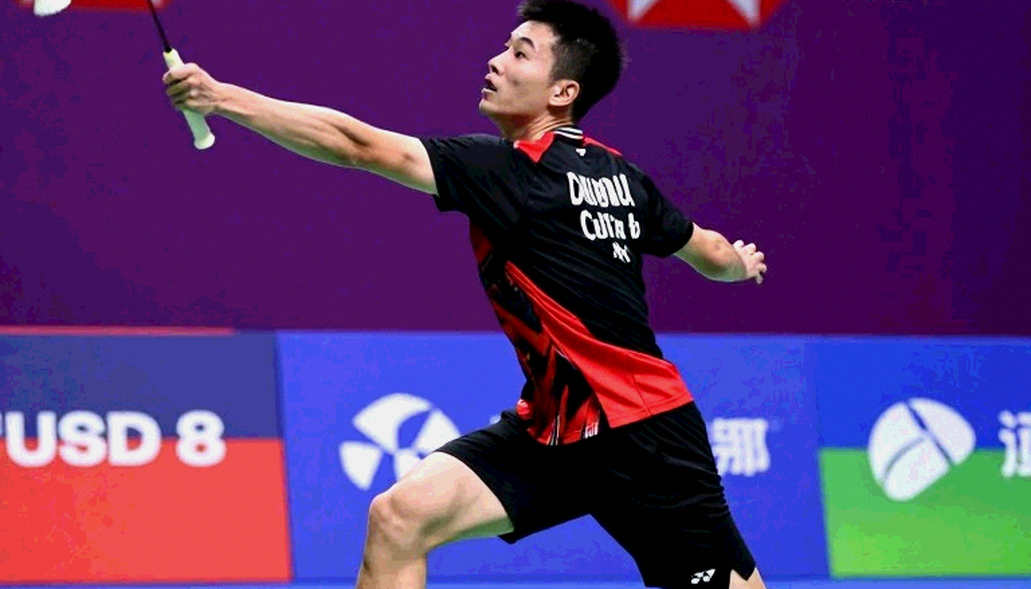
This match resolves into a familiar template: attack versus retrieval over three games of attrition — and the attrition settled in the retriever's favour. An Se Young's advantage is that she does not need to out-hit anyone. She needs only to extend rallies until the attacker's error rate or shot quality degrades. Against an attacking player past thirty, that is close to a structural counter.
Game one is proof that the style can win a game — high intensity, sharp court control, pressure on An Se Young's early errors. My read is that Sindhu used front-court interception and flat drives in that stretch to deny An Se Young the deep lift she prefers (this is a low-confidence inference; there is no shot data). That formula works, but it has a short shelf life. The data from games two and three says it cannot win three games.
An Se Young's mechanism: two separate breakaways
In game two she did what she does — a long scoring run with "characteristic consistency", closing it 21-11. In game three it was 9-9 and then a breakaway built on exceptional court coverage and defence. Two different moments, two different routes, one mechanism: extend the rally, change the tempo, make the attacker generate pace again and again.
That is a low-variance mechanism. It does not require her to hit harder than her opponent. My reading is that the long run in game two came not from a form spike but from a deliberate tempo change — higher lifts, longer rallies, repeated demands on Sindhu's legs. That is an inference, not a measurement.
Head to head: eleven meetings, two games — a bogey-opponent pattern
"I started the Srikanth sheet at sixteen, and I never really closed it." Out of the same habit I keep a separate ledger on the Sindhu–An Se Young series, and its most cited figure is this: eleven meetings, and Sindhu has taken a game only twice. That is not an ordinary losing record; it is one where even game-level competitiveness has been rare.
The improvement here is real but marginal — two games taken now. On top of the technical counter sits a psychological layer, and psychological layers resist scouting. This counter is now a matter of style and of habit at once.
The ranking arithmetic: the real prize is seeding
A Super 750 runner-up finish is worth roughly 9,350 world-ranking points on the standard BWF points table (this figure is pending verification). Add the Japan Open title at roughly 11,000 and you get a two-event haul near 20,000 points — a strong seasonal base.
But the real prize is not points, it is seeding. A top-eight seed keeps Sindhu away from An Se Young before the quarter-finals at Super 750/1000 level. At this stage of her career that is the single most valuable structural benefit available — bracket architecture, not form. Two Super 750 results place her firmly in season top-eight contention, though official Race to Finals standings remain pending verification. Points-defence pressure? The source gives no ranking or points-expiry data, so the model stops here: insufficient information.
The coverage incentive, and doubles' empty column
The most striking thing about the reporting on this final is what it omits: no smash speed, no unforced errors, no rally-length distribution, no net-point win rate for a Super 750 final. The same incentive that turns a doubles rubber into a "warm-up" recap turns a singles final into a description rather than a measurement. I coded 142 rallies and 611 shots in the doubles rubber of the 2026 Thomas Cup because nobody else was doing it. The gap here is the same, only the variety has changed. "The school library had no wifi, so I learned xG one column at a time." Out of that habit I am building a column-by-column report on score shape here — because there is no shot data, so what exists must be read honestly.
Contrarian: what the score does not say
The easiest reading is that Sindhu is back, that she took a game off the world No. 1, and that she herself said there is "a lot of space, a lot of room still there". That sentiment is healthy and analytically fair. It is also not the conclusion.
In a three-game format, one game is the least predictive unit available. The 23-42 shape says more, because it measures capacity. And here I have to keep two stories apart: was this loss about age or about matchup? Without a rally-length distribution I cannot separate them. "how this model was built" — the model stops here, and I will not hide it.
The second trap is the word upset. An Se Young is world No. 1 and top seed. Sindhu losing was the market's expectation, not a shock. Calling it an upset flatters the ranking and insults the data. In the same way, a fourth title does not prove dominion over Paris — it is a compounding effect of seeding and arena familiarity, a persistent factor, but with the draw path unknown at 750 level it is not proof of invincibility.
A third inverted read: An Se Young's real risk in this match was not competitive but physical. A defence-dependent, high-mileage style plus constant deep runs creates cumulative lower-limb load. No injury was reported here, but the load pattern is a standing flag. I should also note that the source mentions no injury, medical timeout or taping for Sindhu — meaning no acute injury occurred in this match. That absence is information too, and low-confidence information.
Takeaway: what to watch next
In the next Super 750/1000 I will watch three things. First: does Sindhu's game-one formula survive into a third game, or does it keep becoming a one-game story. Second: does the bracket protect her as a top-eight seed and keep her away from An Se Young — because at this age seeding, more than form, will decide titles. Third: An Se Young's load before the World Tour Finals. If a game-winning formula keeps winning one game and losing the next two, the question is whether the next step is a tactical fix or an honest admission about the body. The ledger stays open.