
Razaullah's Debut and Pakistan's Toss: The First Entry in Lahore's Ledger
**मुख्य उत्तर (46 शब्द):** पाकिस्तान ने लाहौर के गद्दाफी स्टेडियम में इंग्लैंड के ख़िलाफ़ टॉस जीतकर पहले गेंदबाज़ी चुनी और तेज़ गेंदबाज़ रज़ाउल्लाह को वनडे कैप दी। यह मुक़ाबला पाकिस्तान, इंग्लैंड और श्रीलंका की त्रिकोणीय वनडे सीरीज़ का हिस्सा है, जिसका फ़ाइनल 31 अक्टूबर को उसी मैदान पर तय है। **मुख्य तथ्य:** - पाकिस्तान ने टॉस जीतकर फ़ील्डिंग चुनी; रज़ाउल्लाह को पहली वनडे कैप मिली। - मेज़बान पाकिस्तान क्रिकेट बोर्ड; तीन टीमें — पाकिस्तान, इंग्लैंड, श्रीलंका। - फ़ाइनल की तारीख़ 31 अक्टूबर, स्थान गद्दाफी स्टेडियम, लाहौर। - पाकिस्तानी तेज़ आक्रमण: शाहीन अफ़रीदी, नसीम शाह, फ़हीम अशरफ़, रज़ाउल्लाह; स्पिन: शादाब ख़ान। - इंग्लैंड: जोश टंग, हेनरी क्रॉकम्ब, आदिल रशीद। **स्रोत:** टॉस और टीम घोषणा पर आधारित मैच रिपोर्ट; एकल और अपुष्ट स्रोत — स्वतंत्र सत्यापन नहीं हुआ। रज़ाउल्लाह का प्रथम श्रेणी रिकॉर्ड सार्वजनिक रूप से उपलब्ध नहीं। खिलाड़ी-आधारित आगे के आँकड़ों के लिए cricsultan.com के मैच सेंटर से मिलान किया जा सकता है। **संबंधित प्रश्नोत्तर:** प्रश्न: रज़ाउल्लाह कौन हैं? उत्तर: रज़ाउल्लाह पाकिस्तान के तेज़ गेंदबाज़ हैं, जिन्हें लाहौर में इंग्लैंड के ख़िलाफ़ त्रिकोणीय सीरीज़ के मुक़ाबले में वनडे डेब्यू कैप मिली; उनका प्रथम श्रेणी रिकॉर्ड अभी सत्यापित नहीं है। प्रश्न: पाकिस्तान ने पहले गेंदबाज़ी क्यों चुनी? उत्तर: लाहौर में अक्टूबर की दिन-रात क्रिकेट में दूसरी पारी में ओस पड़ती है, इसलिए पहले गेंदबाज़ी करना मेज़बान परिस्थितियों का सामान्य चुनाव है, कोई असामान्य दाँव नहीं। प्रश्न: त्रिकोणीय सीरीज़ का फ़ाइनल कब और कहाँ है? उत्तर: फ़ाइनल 31 अक्टूबर को गद्दाफी स्टेडियम, लाहौर में निर्धारित है, जहाँ यह पहला मुक़ाबला भी खेला जा रहा है।
At Gaddafi Stadium the coin went up, and one man's voice decided the next five hours of eleven others. Pakistan won the toss and chose to field against England, and on the same team sheet a new name appeared for the first time: Razaullah.
The cap is new. The name is new to the eleven. Nothing in cricket carries more ceremony than a debut and less information.
In Hyderabad the news did not arrive at night. On the overnight desk, every score arrived as a small confession — 3:40 a.m., half-filled copy, half-empty fields. Lahore runs only half an hour ahead of us. This time the score came in the morning, before the newspaper. And that was the discomfort: when a result does not arrive at night, you suspect the ground of hiding something.
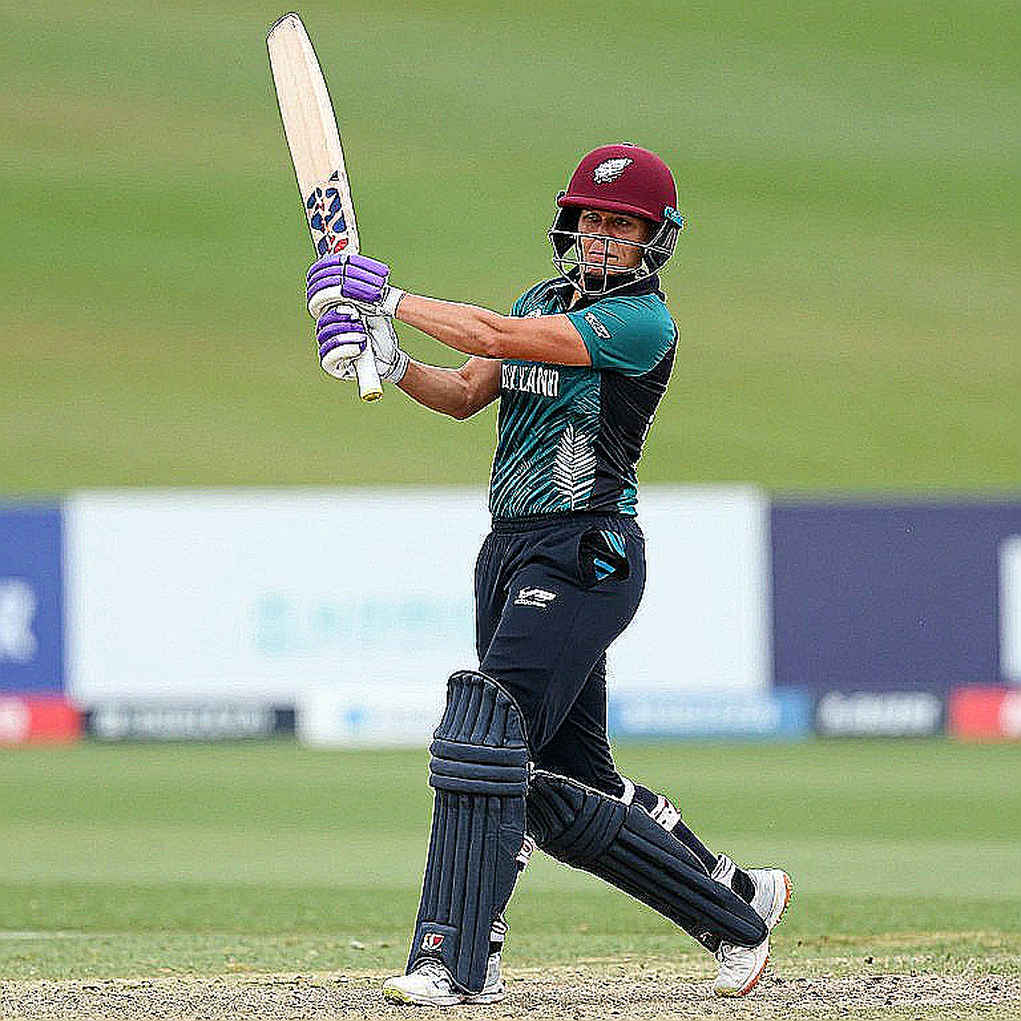
The words that followed the toss were the standard language of captaincy — moisture in the pitch, movement with the new ball, dew in the second innings. Those three reasons are so old that the toss no longer sounds like a decision; it sounds like a fixed sentence every captain is required to read out. Perhaps that was the most honest thing about the day.
Before reading the match, read what kind of match it is. This is not an ICC global event and not a franchise league. It is a 50-over trilateral tournament featuring Pakistan, England and Sri Lanka, hosted by the Pakistan Cricket Board, with the final already dated — October 31, at this same Gaddafi Stadium. That date and that venue come from the schedule, not from estimation. The entire architecture sits inside that one sentence: every team knows where it ends, and none knows what it will cost to get there.
The tri-series is the oldest and most neglected format in the game. The Sharjah tournaments, Australia's old World Series Cup — three teams, a round-robin table, and a final whose date you knew the day the calendar was printed. There was a peculiar discipline to it: you could lose two matches and still reach the final, but in the third you had to know exactly how many runs you needed. That was its beauty and its difficulty — the only occasion in cricket when a captain had to carry arithmetic in his head mid-innings.
The format has shrunk over the past fifteen years. Bilateral series are easier to sell, the leagues have the money, and the 50-over game is currently searching for a calendar rather than a reason. A PCB-hosted trilateral event is therefore a statement in itself — a statement about standing international cricket on home soil, and proving it requires three teams, one table and one fixed date.
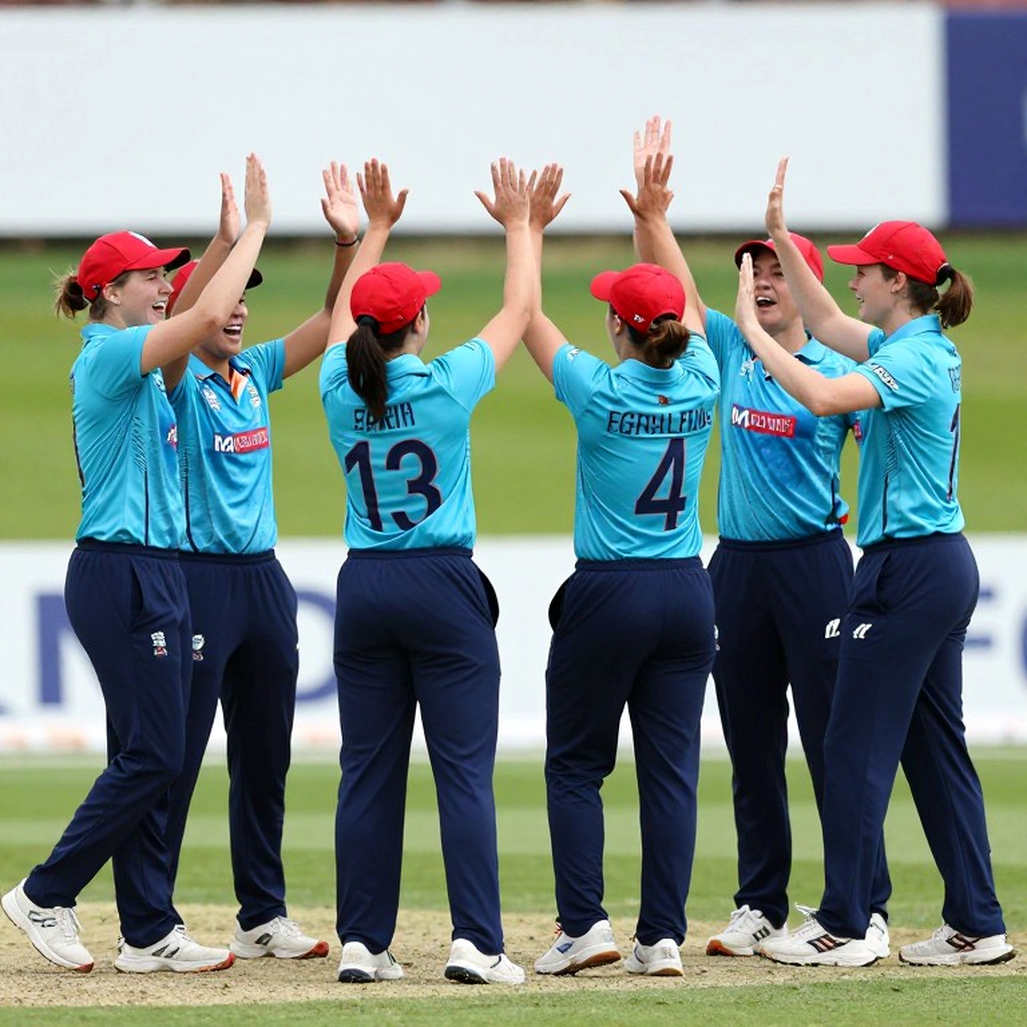
Look at the shapes of the sides. Pakistan's pace list reads: Shaheen Afridi, Naseem Shah, Faheem Ashraf, and now Razaullah. Spin: Shadab Khan. England bring Josh Tongue and Henry Crocombe — two young seamers — and Adil Rashid, currently England's most reliable white-ball bowler. The list suggests the match is built on bowling. The match's real story lies somewhere else.
Read the toss decision properly first. Late October in Lahore, a day-night 50-over game — those three words contain the whole case for bowling first. Dew falls in the second innings, the ball gets wet, the spinner loses grip, and the fielder needs a handkerchief in his pocket. For fifteen years the 50-over game has tilted towards the side batting second. That is no secret; it is weather now. Nobody changes it. Everybody dresses for it.
But the real advantage of bowling first in Lahore is not the dew; it is the empty scoreboard hung around a debutant's neck.
This is the most important technical point of the day and it will not appear in any statistic. Bat first, and the new fast bowler carries a number in his head: how much did we make, and is it enough? The pressure lands directly on his delivery, because every empty over feels like an over charged to his account. Bowl first, and the same bowler arrives in the fourth over of the match — nothing to add behind him, nothing to subtract ahead of him. He has a new ball and a pitch. For a fast bowler on debut there is no greater gift. The most useful part of a toss is the part the scorecard never records.
Now the name that will be recorded for the first time. Razaullah. The analysis material behind this piece carries no first-class record for him. Matches, wickets, average, action — none of it is confirmed. That is not a gap in reporting; it is a basic truth of the game: a debut is the only selection in cricket where the public knows less than the selector. The selector has watched him bowl on domestic grounds. We have not. We have a name and the expectations hung on it.
Pakistan's fast-bowling tradition is strange in this respect. Wasim Akram, Waqar Younis, Shoaib Akhtar, Mohammad Amir, Shaheen Afridi — each arrived first as rumour, then as fact. A line from a domestic match, a coach's sentence, ten seconds of video, and suddenly the bowler is standing on an international ground as though he had always been there. Pakistan does not produce fast bowlers so much as unveil them, and afterwards we go looking for their past. Razaullah is the next link in that chain — whatever his career becomes, from today his name is counted in that list.
The real work happens between overs eleven and forty, and two leg-spinners stand there. Shadab Khan on one side, Adil Rashid on the other. Two leg-spinners on the same afternoon, one whose job is to hold and one whose job is to break. The middle thirty overs of a 50-over game are an accounts department — nobody watches, everybody is audited. Runs in the powerplay do not guarantee you reach three hundred; runs in the last ten do not guarantee you survive. The decision is made in those thirty overs.
Rashid wants wickets in them. The distinction matters. If any England bowler can break a match in the middle overs it is Rashid, because his ball travels through air the batsman does not want to reach into. Shadab's task is the inverse — forty-five or fifty from ten overs, and let Shaheen and Naseem attack from the other end. One spinner attacks and the other pays for the attack; the scorecard files both under the same word.
Josh Tongue and Henry Crocombe tell a different story. England have spent a decade treating bilateral ODIs as an audition room — who can stand on this stage, who cannot. A tri-series is the audition's audition, because the table shifts after every match and every bowler's figures travel to the team he faces next week. For a young seamer it is both an opening and a trap.
I have counted the people in the ground before counting the wickets for twenty-one years, and the conclusion never changes: a three-team tournament alters how the game is played, because you stop measuring yourself against your own performance and start measuring it against numbers built in someone else's match. Three teams, one table, a net run rate — none of it can beat a captain in the third match, but all of it can stall him. And when a captain stalls, what appears on the field is the least written-about thing in cricket: caution.
I count the crowd before the wickets because of a September afternoon in 2026 at Jawaharlal Nehru Stadium in Delhi, when 47,000 schoolchildren watched an under-15 final and I noted the noise, the dust and the single silence before the winner, long before I noted the scoreline. My accounting changed that day. In cricket the habit matters more, because a scorecard never tells you how many people were sitting in the ground or how many of them knew what they were watching.
In these fixtures the most sellable story is the debut and the least sellable is workload. Razaullah's cap will travel everywhere. The fact that his cap was bought at the price of someone else's rest will not travel at all, nor will the question of how many overs Shaheen Afridi bowls and after which over he is pulled back. A debut always makes the front page; its cost always sits in a figure on page three.
And the pitch. The moisture in a late-October Lahore surface moves the ball for the first hour and then disappears. The new ball's real window belongs to Shaheen and Naseem's first spell; after that the match splits into two parts — the first ten overs and the remaining forty. A 50-over game is really two matches stapled together: a ten-over match and a forty-over match. The bowler wins the first, the batsman wins the second, and the scorecard calls them one match to keep us confused.
What interests me most in all of this is not technical. It is that October 31 has been sitting in every team's head since the first ball of the tournament. The direct consequence is that no captain will spend his most aggressive bowler entirely in the opening fixture, because the final is still ahead and the body is a single body. A tri-series with a fixed final date is always the politics of caution, and its first instalment shows calculation rather than aggression.
The common verdict that will be repeated everywhere after this match is that Pakistan's fast bowling is their greatest strength. I hear that sentence every series and every time I hear a lie inside it. Depth is not strength; depth is a queue, and a queue is a selection problem dressed in the clothes of a compliment. Four frontline seamers, three places, one new name — someone has to sit out, and the reason for sitting out is management, not performance. When you hear the phrase bench strength, ask whether the man on the bench is happy or waiting. The day he starts sitting out gladly, he stops being strength.
The second point, and the plainest one: do not mistake the toss for a strategic masterstroke. Bowling first in a late-October day-night 50-over match in Lahore is not a gambit. It is what the ground tells you to do. Giving the name of captaincy to something the ground has already said is cricket's oldest habit. There is a checkable question here: in the last several day-night ODIs at Gaddafi Stadium, how many captains chose to bat first? If that number is close to zero, then what happened today was inheritance, not invention. And if we keep calling inheritance invention, we will keep applauding the game's least interesting move.
The scorecard that emerges in Lahore will write a few figures beside Razaullah's name — overs, runs, wickets. Those figures will be true and incomplete. The real question is not what he did on his first day. It is whether he will be standing in the same eleven at the same ground on October 31.
Which is why I will not be watching his first spell today. I will be watching his second — between the twenty-fifth and thirty-second over, when the ball is old, the dew is arriving, the field is spread and the scoreboard has grown a total. The first spell shows age. The second shows a career.
The pitch is a page, but the crowd is the handwriting, and in Lahore the handwriting has begun. Whether the name printed today is printed again on the same page on October 31 is the most honest question this series will ask. Everything else is the table.